How to Extend the Life of a Low Slope Commercial Roof in Nashville

Commercial Roofing Contractor Tips from MidSouth Construction

 
A low slope commercial roof is one of the largest investments you will make in your building. Whether you manage an office complex, warehouse, retail center, church, hotel, or multifamily property, your roof protects everything underneath it — tenants, inventory, equipment, and long-term property value.
 

In Nashville, our commercial roofs endure intense summer heat, heavy rain, high winds, hail, and freezing winter temperatures. That kind of seasonal swing takes a toll on flat and low slope roofing systems.


The good news? With the right maintenance plan, you can greatly extend the life of your commercial roof and avoid premature replacement.


Below are proven, useful tips we share with commercial property owners throughout Middle Tennessee.

How Do You Extend the Life of a Low Slope Commercial Roof?

  • Schedule professional inspections twice per year
  • Repair membrane damage immediately
  • Keep drains and scuppers clear
  • Install designated walkways for foot traffic
  • Inspect after severe weather events

Consistent maintenance and early intervention prevent costly leaks and extend the overall lifespan of flat and low slope commercial roofing systems.

Why Low Slope Roofs Require Proactive Maintenance

Unlike steep-slope residential roofs, low slope and flat roofing systems depend heavily on membrane integrity and proper drainage. They are less forgiving when water is allowed to sit or when small issues are ignored.
Common low slope systems include:
  • TPO
  • EPDM
  • Modified bitumen
  • PVC membranes
All of these systems perform well when installed properly — but they require ongoing care.
According to the National Roofing Contractors Association (NRCA), regular roof inspections and maintenance are among the most important factors in extending roof lifespan.

1. Schedule Routine Roof Inspections 

This sounds simple — but it is often overlooked.
Commercial roofs should be inspected:
  • At least annually but recommended twice per year (spring and fall)
  • After any significant storm event
  • After major rooftop service work (HVAC, electrical, etc.)
In Nashville, we regularly see hail and high winds that leave damage not visible from the ground. Small membrane punctures or lifted seams can quickly turn into interior leaks.
A professional inspection allows a commercial roofing contractor to:
  • Identify membrane stress points
  • Check flashing and penetrations
  • Inspect drainage systems
  • Detect early water intrusion
  • Evaluate seam integrity
At MidSouth Construction, we also use infrared technology when needed to detect trapped moisture under the surface — helping property owners avoid costly surprises.

Need a Professional Commercial Roof Inspection?
Our commercial roof inspection services in Nashville are designed to identify membrane damage, drainage concerns, flashing failures, and early moisture intrusion before they become major expenses. Schedule a proactive evaluation with MidSouth Construction today.

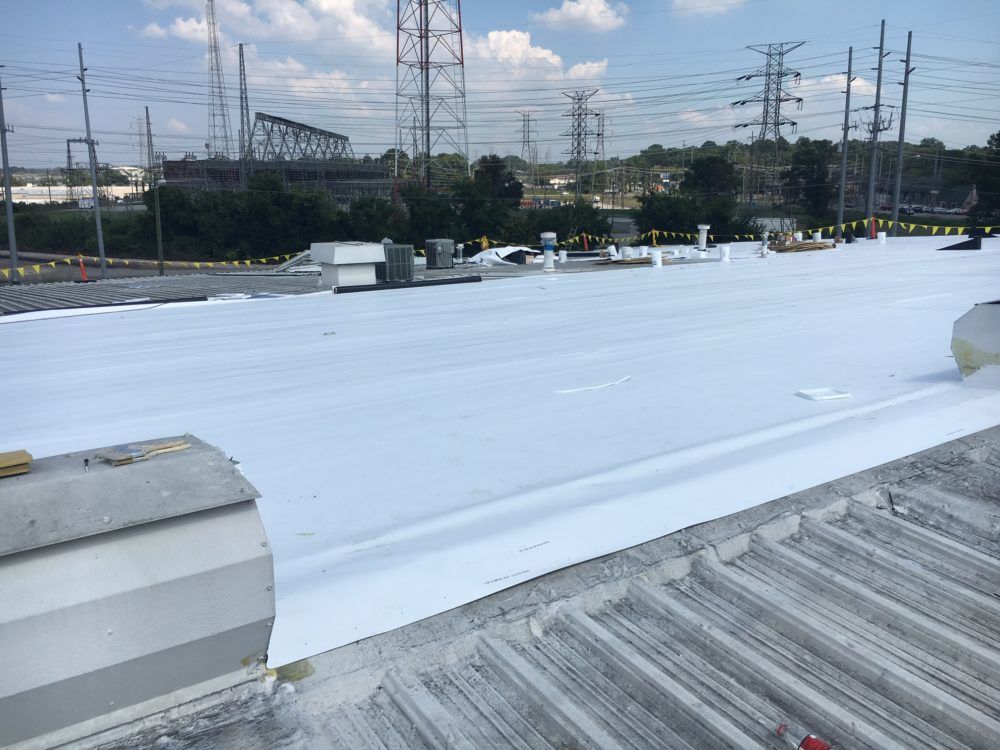
Man inspecting a commercial metal roof.

2. Address Repairs Immediately — Small Problems Become Expensive Ones

If your inspection reveals an issue, do not delay repairs.
Low slope roofing systems are designed to shed water, but when damage exists, even minor punctures or seam failures can allow water to migrate beneath the membrane.
Common early-stage issues include:
  • Open laps or seam separation
  • Minor membrane punctures
  • Loose flashing
  • Small areas of ponding water
When addressed quickly, these are minor repairs. When ignored, they can lead to:
  • Saturated insulation
  • Deck deterioration
  • Interior ceiling damage
  • Mold concerns
  • Inventory loss
Roof leaks do not fix themselves. Postponing repairs almost always increases total cost.

Don’t Wait on Commercial Roof Repairs.
Small leaks quickly become costly structural problems. Our commercial roof repair team responds quickly to protect your building, tenants, and inventory from preventable damage.

What Causes Flat Commercial Roofs to Fail?

Flat commercial roofs typically fail due to poor drainage, ponding water, unaddressed membrane damage, storm impacts, excessive foot traffic, and lack of routine maintenance. When small issues like open seams or clogged drains are ignored, they allow moisture intrusion that accelerates structural deterioration.

3. Keep Drains and Rainwater Outlets Clear

Drainage is critical on low slope roofs.
Blocked drains are one of the most common causes of flat roof failure. Leaves, debris, and rooftop trash can clog scuppers and internal drains, leading to ponding water.
The International Institute of Building Enclosure Consultants (IIBEC) notes that improper drainage is a leading contributor to commercial roof deterioration.
Standing water increases membrane stress, accelerates material breakdown, and can compromise structural strength over time.
Regular maintenance should include:
  • Removing debris from drains and scuppers
  • Inspecting drain strainers
  • Checking for proper slope toward outlets
  • Make sure that no mechanical equipment obstructs the flow
A clean drainage system alone can extend roof lifespan by years.
Ponding water on commercial roof in needs of roof maintenance and repair

4. Install Designated Walkways to Minimize Foot Traffic Damage

Commercial roofs typically have HVAC units and mechanical systems installed on them. That means technicians are regularly walking across your membrane.
Repeated foot traffic can:
  • Compress insulation
  • Create membrane wear paths
  • Cause seam stress
  • Increase risk of punctures
Installing designated walkway pads or reinforced traffic paths helps protect areas that receive a lot of foot traffic.
Property managers should also require service contractors to use designated access paths. Simple preventative measures can make a big difference in preventing damage.

Flat & Low Slope Roofing Specialists.
From TPO and EPDM to modified bitumen systems, our low slope commercial roofing services are tailored for long-term durability and energy efficiency across Middle Tennessee.

5. Inspect After Severe Weather Events

Middle Tennessee weather is unpredictable. High winds and hail can damage membranes, flashings, and edge metal without obvious signs from ground level.
The  National Weather Service frequently reports storm activity impacting the Nashville area.
After any severe weather event, schedule a professional inspection. There is often a time limit for property owners to document and file insurance claims if storm damage is present.
Catching damage early protects both your building and your financial investment.
 

Storm Damage to Your Commercial Roof?
Our team documents wind and hail damage and assists property owners through the commercial roofing insurance claim process to ensure nothing is overlooked.


6. Consider a Preventive Maintenance Program

A structured maintenance program removes guesswork and protects the budget.
A professional maintenance plan typically includes:
  • Regularly scheduled roof inspections, including inspection of seams
  • Minor preventative roof repairs, including patching when necessary
  • Drain or scupper cleaning
  • Inspection of any fasteners and flashings
  • Gutter cleaning
  • Sealant touch-ups
  • Detailed condition reports
  • Budget forecasting for future replacement
Rather than reacting to emergencies, you stay ahead of them.

Protect Your Investment with a Maintenance Plan.
Ask about our structured commercial roof maintenance programs designed to extend lifespan, prevent emergency repairs, and provide long-term budgeting clarity for property managers.

How Long Does a Low Slope Commercial Roof Last?

A low slope commercial roof typically lasts between 15 and 30 years depending on the roofing material, installation quality, climate conditions, and maintenance schedule. Systems like TPO and EPDM often perform well when professionally installed and regularly inspected.

Frequently Asked Questions About Low Slope Commercial Roofs

How long should a low slope commercial roof last?

Most low slope roofing systems last between 15 and 30 years, depending on material type, installation quality, climate conditions, and maintenance consistency.


How often should a commercial roof be inspected?

A minimum of twice per year is recommended, along with additional inspections after major storm events.


What causes flat roofs to fail prematurely?

The most common causes include poor drainage, lack of maintenance, unaddressed storm damage, membrane punctures, and excessive foot traffic.


Is ponding water a serious issue?

Yes. While some temporary ponding can occur, prolonged standing water accelerates membrane deterioration and increases the risk of leaks.


When should a roof be replaced instead of repaired?

If widespread membrane failure, insulation saturation, or structural deck damage is present, replacement may be more cost-effective than repeated patch repairs. A professional evaluation is required to determine the best solution.

Why Commercial Property Owners Trust MidSouth Construction
As a licensed Nashville commercial roofing contractor, we install, repair, and maintain flat and low slope systems for office buildings, warehouses, retail centers, churches, and multifamily properties throughout Middle Tennessee.

Protect Your Commercial Roof Investment

Your roof is not just another building component — it protects everything beneath it.

Extending the life of a low slope commercial roof is not complicated. It requires:

  • Routine inspections

  • Prompt repairs

  • Proper drainage

  • Controlled foot traffic

  • Experienced oversight

If you own or manage commercial property in Nashville or Middle Tennessee, MidSouth Construction is here to help.


Call 615-712-8893 to schedule a professional commercial roof inspection or discuss a preventative maintenance plan.

  • Protect your investment.
  • Extend your roof’s lifespan.
  • Stay ahead of costly repairs.

Table of Contents

Relevant Articles

Top Five Components of a Roof

TOP FIVE COMPONENTS OF A PERFECT ROOF!

Share at: ChatGPT Perplexity WhatsApp LinkedIn X Grok Google AI The Five Essential Components of a Perfect Roof (Complete Homeowner Guide) What Are the 5 Most Important Parts of a Roof? The five most important components of a roofing system are: Roof Decking – The structural foundation that supports your entire roof Underlayment – A water-resistant barrier beneath shingles Drip

Before and after roof restoration.

Case Study: TPO Flat Roofing Over BUR|EPDM Roof in Nashville, TN

Share at: ChatGPT Perplexity WhatsApp LinkedIn X Grok Google AI MidSouth Construction completed a commercial roofing project in Nashville, TN, installing a 60 mil Carlisle TPO roofing system over an existing BUR roof and replacing an EPDM ballasted system. The project included ISO insulation, professional flashing, and resulted in a durable, energy-efficient roofing system backed by a 15-year manufacturer warranty

Here's an alt tag for the image: Nashville's top roofers: hiring guide.

Top 5 Nashville Roofing Contractors: Expert Comparison & Reviews

Share at: ChatGPT Perplexity WhatsApp LinkedIn X Grok Google AI Top 5 Nashville Roofing Contractors: Expert Comparison & Reviews Who are the top 5 roofers in Nashville?  Answering that question and finding the best Nashville, TN roofing contractor depends on your specific roofing needs. Nashville and Davidson County are home to dozens of contractors offering roof replacement, storm damage repair,