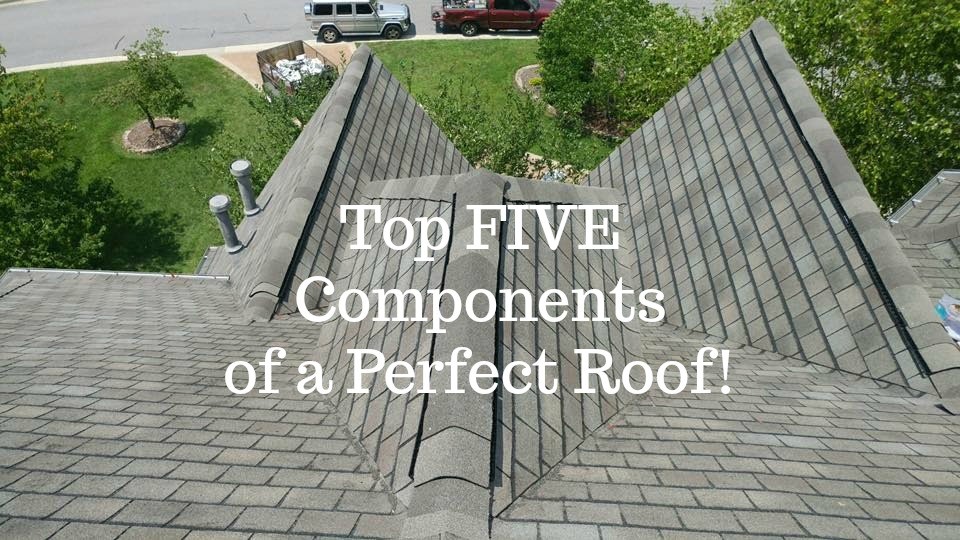
The Five Essential Components of a Perfect Roof (Complete Homeowner Guide)

What Are the 5 Most Important Parts of a Roof?

The five most important components of a roofing system are:

  • Roof Decking – The structural foundation that supports your entire roof
  • Underlayment – A water-resistant barrier beneath shingles
  • Drip Edge & Ice and Water Shield – Protection for edges and vulnerable areas
  • Roof Flashing – Seals penetrations like vents and chimneys
  • Roof Ventilation – Regulates airflow to prevent moisture and heat damage

A properly installed roofing system ensures long-term durability, prevents leaks, and improves energy efficiency—especially in climates like Middle Tennessee where weather conditions can change rapidly.

Why Roofing Standards Matter

A quality roof is more than just shingles. It is a complete system made up of decking, underlayment, leak barriers, flashing, and ventilation. Homeowners who want to better understand proper installation and long-term roof performance can review roofing guidelines and industry standards as well as roofing system components explained for homeowners.

At MidSouth Construction, we believe informed homeowners make better decisions when choosing a roofing contractor in Nashville and throughout Middle Tennessee.

Why Your Roof System Matters More Than You Think

Most homeowners think of a roof as just shingles sitting on top of their house. But that’s like thinking a car is just its color job. In reality, your roof is a multi-layered system, and every single component fulfills a key role in protecting your home. When even one piece fails, the entire system becomes vulnerable—and that’s when costly problems start.
 

Here’s something that might surprise you: nearly 4 in 10 homes in the U.S. have roofs in moderate to poor condition. That’s not because shingles suddenly stopped working—it’s because the underlying system wasn’t built or maintained correctly. A roof isn’t simply about keeping rain out; it protects your structure, your insulation, your energy efficiency, and ultimately your investment.

Think of your roof like a shield. If one layer weakens, the entire defense system breaks down. Water finds a way in, wood begins to rot, and suddenly, what started as a small issue turns into a major repair or replacement. That’s why grasping the core components of a roofing system isn’t just helpful—it’s essential.

The Real Cost of Roof Failure

Not Sure If Your Roof Has All the Right Components?

Many roofing problems are hidden beneath the shingles. Missing flashing, poor ventilation, damaged decking, and low-quality underlayment can all lead to leaks and premature roof failure. MidSouth Construction provides free professional roof inspections for homeowners across Nashville and Middle Tennessee.

Call 615-712-8893Schedule a Free Inspection

Serving Nashville, Franklin, Brentwood, Murfreesboro, Hendersonville, Gallatin, and surrounding areas.

Roof failure isn’t just inconvenient—it’s expensive and disruptive. In fact, roof-related damage accounts for an estimated 70–90% of insured residential catastrophic losses . That means when storms hit or leaks develop, your roof is often ground zero for damage.
 
But here’s the catch: most roof failures aren’t caused by extreme weather alone. They’re caused by improper installation, poor ventilation, or missing components. That means many of these issues are preventable. Investing in a properly installed roofing system upfront can reduce the risk of premature failure by over 50% .

When you understand what goes into a quality roof, you start to see why trimming corners is never worth it. It’s not simply about saving money today—it’s about avoiding major costs tomorrow.

How Small Mistakes Lead to Big Problems

Roofing issues rarely start as disasters. More often, they begin as small oversights—missing flashing, inadequate ventilation, or subpar underlayment. Over time, these minor issues compound. Moisture builds up, materials degrade, and eventually, the damage becomes visible.


One of the most overlooked problems? Ventilation. Studies suggest that 70–90% of homes fail to meet proper ventilation standards . That means most roofs are silently aging faster than they should, even if they look fine from the outside.
It’s like ignoring a slow leak under your sink. You don’t notice it right away, but over time, it causes serious damage. The same thing happens with your roof.
 

Component #1 – Roof Decking: The Foundation of Your Roof

What Roof Decking Actually Does

Your roof decking is the backbone of your entire roofing system. It’s the surface everything else is installed on, and without a solid deck, nothing above it performs correctly. Think of it like the foundation of a house—if it’s weak, everything built on top of it is compromised.
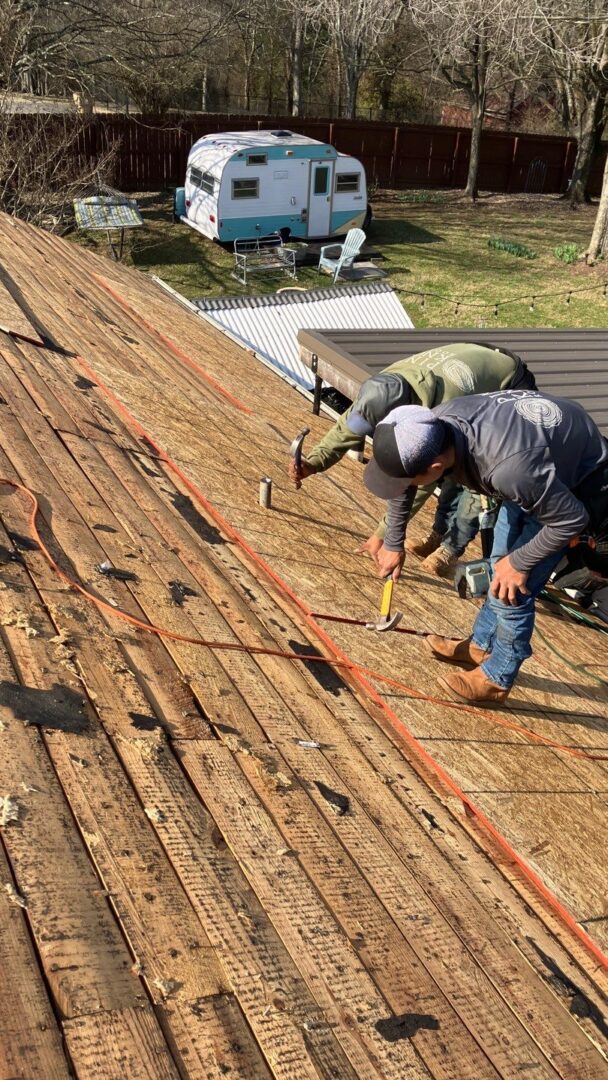

Roof decking provides a flat, stable surface for shingles and underlayment while also supporting the structural strength of your roof. It helps spread weight evenly and ensures your roof can withstand wind, rain, and other atmospheric forces.
 
The content you provided highlights this perfectly—your decking must be level, firm, and free of moisture damage . If it’s not, you’re essentially installing a new roof on a failing base.
 
Roofing Decking - Nashville Roofers install proper roof sheathing over old space decking

Signs Your Roof Deck Needs Replacement

One of the biggest mistakes homeowners make is assuming decking is always fine. In reality, decking issues are common, especially in older homes. Signs of trouble include sagging areas, soft spots, or visible rot.

When moisture gets into your decking, it weakens the wood and compromises the entire structure. Over time, this can lead to sagging roofs or even structural failure. If your home has older “space decking” (individual boards instead of solid sheets), upgrading to modern materials like OSB can dramatically improve resilience and functionality.

Skipping this step is like putting new tires on a car with a broken frame—it just doesn’t work.


A Roof Can Look Fine From the Ground and Still Have Serious Problems

Roof decking issues, moisture damage, and poor underlayment installation are often impossible for a homeowner to spot from the driveway. That is why a professional inspection matters. If your roof is aging, has been through recent storms, or you simply want peace of mind, MidSouth Construction can help.

We provide honest evaluations, explain what we find, and help homeowners understand whether they need a repair, replacement, or no action at all.

Request Your Free Roof Inspection

Get a Quick Quote

Component #2 – Roofing Underlayment: Your Hidden Leak Barrier

Types of Underlayment (Felt vs Synthetic)

Underlayment is the layer that sits between your shingles and your decking. You’ll never see it, but it plays a massive role in protecting your home from water intrusion. It acts as a secondary barrier, catching water that gets past your shingles.

Traditionally, felt paper was the go-to option. While it still works, modern roofing systems have largely shifted toward synthetic underlayment, which offers superior durability and performance.

Why Synthetic Underlayment Is Superior

Synthetic underlayment is stronger, more resistant to tearing, and performs better in extreme weather. It lays flatter, lasts longer, and provides better protection against leaks.

Your original blog mentions this clearly—synthetic underlayment is far less likely to tear or blow off during strong winds . That’s a big deal, especially in storm-prone areas like Nashville.
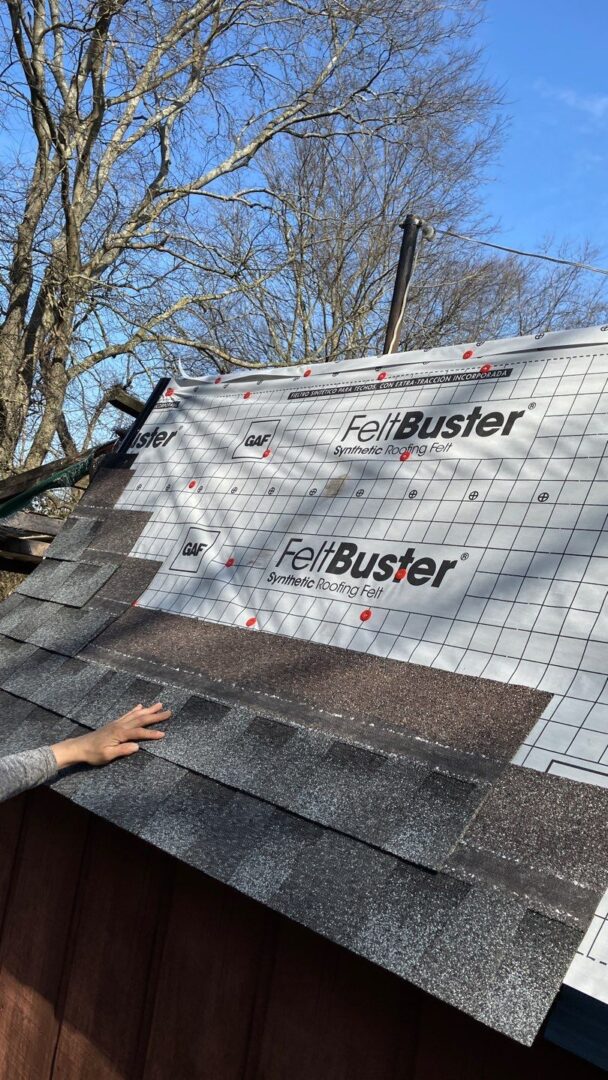
When you think about it, this layer is your roof’s safety net. If your shingles fail, your underlayment is what stands between your home and water damage.
 
Synthetic felt provides superior underlayment protection for a roofing system

Component #3 – Drip Edge and Ice & Water Shield

Where These Materials Are Installed
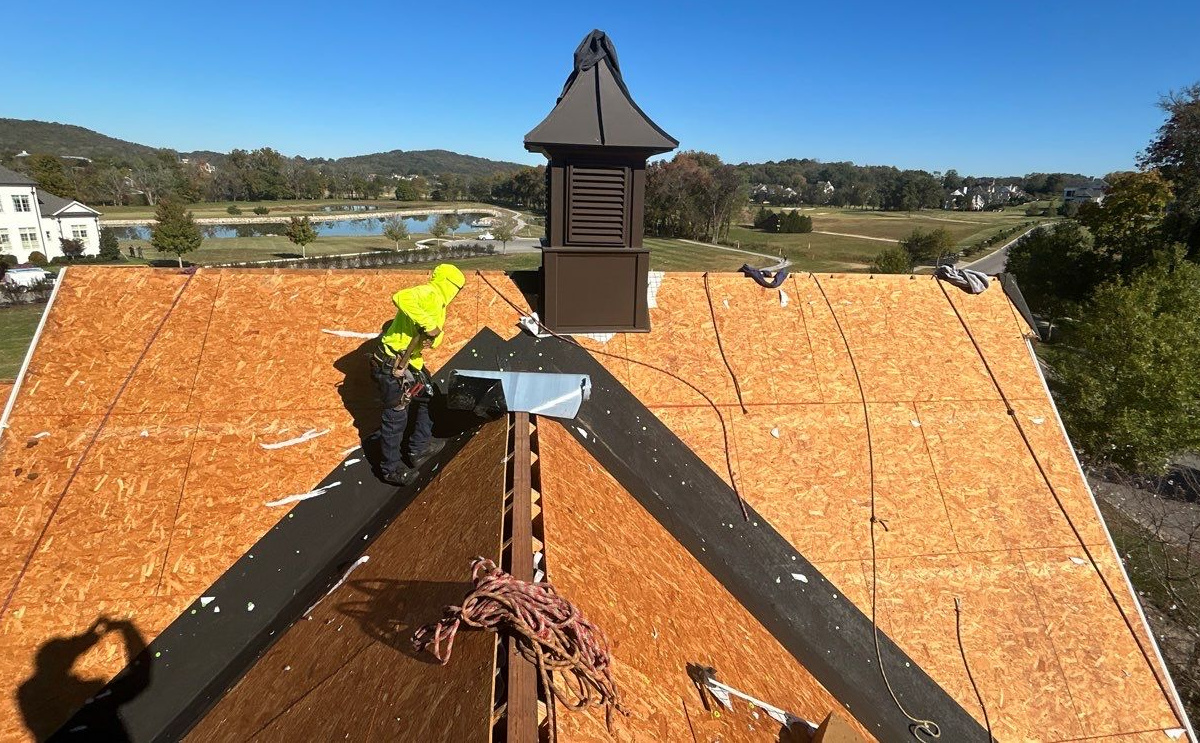
Drip edge and ice & water shield are installed in the most vulnerable areas of your roof—edges, valleys, and penetrations. These are the spots where water naturally collects and where leaks are most likely to occur.
Drip edge directs water away from your roof and into your gutters, preventing it from seeping into the base structure. Ice & water shield, on the other hand, is a waterproof membrane that provides extra protection in high-risk areas.
 
Properly Installed Ice and Water Shield in valleys of the roof prevent roof leaks

Why Code Compliance Matters in Roofing

Building codes exist for a reason—they’re designed to prevent common failures. Unfortunately, many roofs are installed without meeting these standards.
As your original content points out, it’s incredibly common to see roofs missing these critical components . That’s a issue since lacking them, your roof is far more susceptible to leaks.

In areas subject to fluctuating weather, like Tennessee, these materials aren’t optional—they’re essential.


Component #4 – Roof Flashings: The Most Common Leak Point

Types of Flashing You Should Know

Flashing is installed around roof penetrations like chimneys, vents, and skylights. These are the weakest points in your roof system, and without proper flashing, leaks are almost guaranteed.

There are several types of flashing, including step flashing, pipe boots, and counter flashing. Each one fulfills a specific purpose, but they all work together to keep water out.

Why Reusing Flashing Is a Mistake

One of the biggest shortcuts in roofing is reusing old flashing. It might save time or money upfront, but it almost always leads to problems later.

Your source content emphasizes that flashing should always be replaced during a roof installation . That’s because these components wear out over time and are prone to failure.
 
In fact, issues including improper flashing are among the most common causes of roof leaks . It’s a small detail that makes a huge difference.
 
Proper way to install copper counter flashing on a chimney

Hidden Roof Damage Is Easy to Miss

Many roof problems begin in places homeowners rarely inspect closely, including flashing, penetrations, attic spaces, and ventilation areas. If you want to better understand what professionals look for during a roof evaluation, InterNACHI offers educational resources on roof inspection best practices.


This is especially helpful after storms, when subtle issues can turn into costly leaks over time. If you suspect storm damage or want peace of mind, MidSouth Construction provides honest, detailed roof inspections in Nashville and Middle Tennessee.

Component #5 – Roof Ventilation: The Most Overlooked System

How Proper Ventilation Works

Ventilation allows your roof to “breathe” by balancing air intake and exhaust. Fresh air enters through soffit vents and exits through ridge vents, creating a continuous airflow.
This airflow helps regulate temperature and moisture levels inside your attic, which protects your roof and improves energy efficiency.
 

The Risks of Poor Ventilation

Here’s where things get serious. Poor ventilation doesn’t just reduce efficiency—it can destroy your roof from the inside out. Studies show improper ventilation can reduce shingle lifespan by up to 20–24% .
 
Even more alarming, ventilation issues are responsible for a large percentage of roof failures . That means your roof could fail without ever experiencing a major storm.

It’s the silent killer of roofing systems—and one of the most overlooked.
Image of a home with a designer shingle and ridge vent installed.

The Most Common Roof Leaks Start in the Areas Homeowners Never Check

Flashing, pipe boots, roof penetrations, and poor attic ventilation are some of the most common causes of hidden roof damage. By the time water stains show up inside your home, the damage may already be extensive. A proactive roof inspection can help catch issues before they become expensive repairs.

If your home has been through hail, wind, heavy rain, or seasonal temperature swings in Middle Tennessee, now is a smart time to have your roof evaluated.

Call MidSouth Construction


Learn More About Our Roofing Services

How These Components Work Together as a System

A roof isn’t just a collection of parts—it’s a framework where every component relies on the others. Decking supports the structure, underlayment protects against moisture, flashing seals vulnerable areas, and ventilation guarantees long-term performance.

If one piece fails, it puts stress on the rest. That’s why a high-quality roof isn’t about one material—it’s about how everything works together.


Common Roofing Mistakes Homeowners Should Avoid

Many roofing problems come down to simple mistakes:
Mistake Why It’s a Problem
Skipping decking inspection Leads to hidden structural issues
Using cheap underlayment Increases risk of leaks
Reusing flashing Causes early failure
Ignoring ventilation Shortens roof lifespan
Hiring inexperienced contractors Results in poor installation

Avoiding these mistakes can save you thousands in repairs.

Proper Attic Ventilation Protects More Than Your Roof

Poor attic airflow can contribute to excess heat, trapped moisture, and premature roof wear. Homeowners researching roof ventilation in Nashville or trying to understand how insulation and airflow work together can review
home insulation and energy-saving guidance
from the U.S. Department of Energy. When your roofing system is properly ventilated, it helps support comfort, efficiency, and long-term roof performance. That is why MidSouth Construction evaluates ventilation as part of every thorough roof inspection.


Choosing the Right Roofing Contractor in Nashville

Not all roofing contractors are created equal. The difference between a roof that lasts 30 years and one that fails in 10 often comes down to installation quality.
Look for a contractor who:
  • Inspects every component of your roof system
  • Follows local building codes
  • Uses top-quality materials
  • Explains the process clearly
A great contractor doesn’t just install a roof—they build a system designed to last.
 

Conclusion

A perfect roof isn’t defined by how it looks—it’s defined by how it performs. From decking to ventilation, every component acts a key role in protecting your home.
When you understand these five key components, you’re no no longer only a homeowner—you’re an informed decision-maker. And that makes all the difference when it comes to protecting your investment.

Protect Your Home With a Roofing System Built the Right Way

From roof decking and underlayment to flashing and ventilation, every component matters. MidSouth Construction helps homeowners throughout Nashville and Middle Tennessee with roof inspections, repairs, replacements, and storm restoration services designed for long-term protection.

Whether you already suspect roof damage or just want confidence that your roofing system is performing the way it should, our team is ready to help.

Call 615-712-8893


Book Your Free Estimate

One Call. One Company. One Team.

FAQs

1. What is the most important part of a roof?

All components are important, but roof decking and ventilation are often the most critical because they impact the entire system.

2. How long should a properly installed roof last?

Depending on materials, anywhere from 20 to 50+ years, but poor installation can cut that lifespan significantly.

3. Is synthetic underlayment worth the upgrade?

Yes, it provides better durability and protection in comparison to traditional felt.

4. How do I know if my roof has poor ventilation?

Signs include high energy bills, uneven temperatures, and premature shingle damage.

5. Should flashing always be replaced during a roof replacement?

Absolutely. Reusing flashing is one of the leading causes of roof leaks.

Table of Contents

Relevant Articles

Before and after roof restoration.

Case Study: TPO Flat Roofing Over BUR|EPDM Roof in Nashville, TN

Share at: ChatGPT Perplexity WhatsApp LinkedIn X Grok Google AI MidSouth Construction completed a commercial roofing project in Nashville, TN, installing a 60 mil Carlisle TPO roofing system over an existing BUR roof and replacing an EPDM ballasted system. The project included ISO insulation, professional flashing, and resulted in a durable, energy-efficient roofing system backed by a 15-year manufacturer warranty

Here's an alt tag for the image: Nashville's top roofers: hiring guide.

Top 5 Nashville Roofing Contractors: Expert Comparison & Reviews

Share at: ChatGPT Perplexity WhatsApp LinkedIn X Grok Google AI Top 5 Nashville Roofing Contractors: Expert Comparison & Reviews Who are the top 5 roofers in Nashville?  Answering that question and finding the best Nashville, TN roofing contractor depends on your specific roofing needs. Nashville and Davidson County are home to dozens of contractors offering roof replacement, storm damage repair,

ROOF INSPECTIONS FOR STORM DAMAGE IN NASHVILLE

What Roof Damage Is Covered by Insurance? | Nashville Roofing Guide

Share at: ChatGPT Perplexity WhatsApp LinkedIn X Grok Google AI Most homeowners insurance policies cover roof damage caused by sudden, accidental events like hail, wind, fallen trees, fire, and storm-related water intrusion. Insurance usually does not cover roof damage caused by wear and tear, poor maintenance, old age, or improper installation. When a storm hits your home, one of the

Summary
Top Five Components of a Perfect Roof
Article Name
Top Five Components of a Perfect Roof
Description
Nashville's top rated roofing company explains the top five components of a perfect roof to ensure your new roof will provide years of durability and protection! Trust your roof to a professional and knowledgeable roofing contractor!
Publisher Name
MidSouth Construction Roofing Contractors
Publisher Logo