

My Roof Is Leaking After Rain—What Should I Do?
A roof leak does not necessarily mean you need a new roof. Many leaks can be repaired quickly and relatively affordably when caught early. However, allowing water intrusion to continue can turn a minor repair into damaged insulation, drywall, roof decking, or even structural damage over time.
At MidSouth Construction, we’ve spent more than 15 years inspecting and repairing roofs throughout Middle Tennessee. One of the most important things we’ve learned is this:
Where you see water isn’t necessarily where the water is entering your home—and what appears to be a roof leak isn’t always a roofing problem.
Quick Answer: What Should I Do If My Roof Is Leaking After Rain?
If your roof starts leaking after rain, contain the water inside with a bucket if necessary and call a qualified local roofing contractor as soon as possible. Do not climb onto a wet roof or attempt DIY repairs with caulk or tarps. A professional should trace the source because water may be entering through roofing, flashing, a chimney, skylight, siding, windows, or even clogged gutters.
What Should I Do Immediately If My Roof Is Leaking?
If you discover water coming into your home during or after heavy rain, the most important thing is to respond quickly without putting yourself at risk.
- Stay off the roof. Wet roofing surfaces can be extremely dangerous.
- Contain the water inside. If water is actively dripping, place a bucket or container underneath it if you can safely do so.
- Protect your belongings. Move furniture, rugs, electronics, and valuables away from the affected area when practical.
- Don’t apply caulk or attempt a DIY roof repair.
- Don’t install a roof tarp yourself unless you have the proper training and experience.
- Call a reputable local roofing contractor quickly.
One of the biggest mistakes homeowners make is waiting to see whether the roof leaks again.
If water entered your home once, something allowed it to get there. The fact that the dripping stopped when the rain stopped does not mean the underlying problem disappeared.
Need professional help? Learn more about our roof repair services in Middle Tennessee.
Don’t Climb on Your Roof to Find the Leak
When water suddenly appears on a ceiling, the natural reaction is to want to find the problem and stop it immediately.
But please don’t climb onto your roof yourself—especially during or immediately following rain.
Roofing professionals use specialized equipment, training, and safety procedures when working at height. Even experienced roofing workers face significant fall hazards, particularly when surfaces become slick.
For additional information about roofing and fall hazards, see OSHA’s fall protection guidance.
Beyond the safety risk, a DIY repair can make the roofing problem worse.
We’ve seen homeowners apply caulk in an attempt to stop a leak, only to damage roofing materials and turn what might have been a straightforward repair into a more complicated one.
The same concern applies to emergency tarping.
A tarp can be useful when professionally installed, but an improperly secured tarp can cause substantial additional roof damage. In some circumstances, the damage created while attempting the temporary repair can become worse than the original problem.
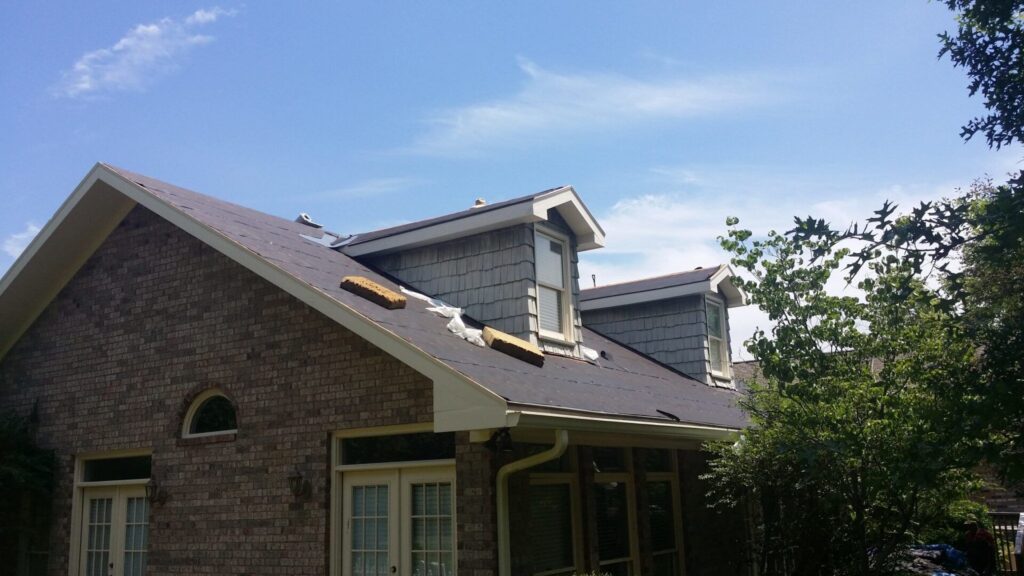
What Causes a Roof to Leak After Heavy Rain?
There are many possible causes, and after more than 15 years in roofing, we see certain problems repeatedly in Middle Tennessee homes.
Some of the most common include:
- Deteriorated pipe jacks or pipe boots
- Chimney flashing
- Skylights
- Dead valleys
- Clogged gutters
- Deteriorated chimney masonry and mortar joints
- Siding or window leaks that are mistaken for roof leaks
The important point is that seeing water inside doesn’t automatically identify its source.
Want to Learn More About Common Roof Leaks?
GAF provides additional homeowner guidance on common causes of roof leaks, including flashing problems and clogged gutters.
Read GAF’s Roof Leak Repair Guide →
Deteriorated Pipe Jacks Can Cause Roof Leaks
Pipe jacks—also called pipe boots—seal the areas where plumbing pipes penetrate the roofing system.
Homeowners often assume every component on a roof will last as long as the shingles. That isn’t necessarily the case.
We’ve frequently found deteriorated pipe jacks on roofs where the shingles themselves still have useful life remaining.
In that situation, replacing an otherwise serviceable roof wouldn’t make sense. The correct solution may simply be repairing or replacing the failed component.
Regular inspections and preventive roof maintenance
can help identify vulnerable roofing components before a small problem becomes a larger leak.
Can Clogged Gutters Cause a Roof Leak?
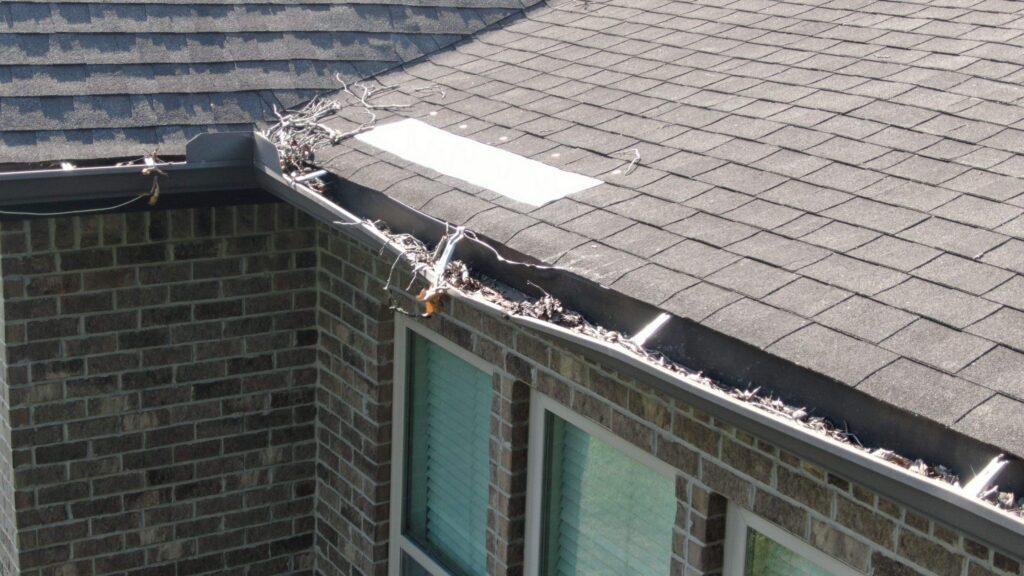
Yes. Clogged gutters can create water intrusion that appears to be a roof leak.
This is something we’ve encountered many times.
When leaves and debris prevent gutters from draining correctly, rainwater can back up instead of moving safely away from the roof. Under the right conditions, that water can work its way beneath roofing materials and into the home.
The homeowner sees water inside and understandably assumes, “My roof is leaking.”
But the roofing system may not be the underlying problem.
Keeping gutters clean throughout the year is an important part of protecting the entire roof and drainage system.
Can a Brick Chimney Cause What Looks Like a Roof Leak?
Absolutely—and this is another problem we encounter regularly.
Many homeowners don’t realize that a brick chimney requires maintenance.
Brick may last for generations, but the mortar joints surrounding those bricks deteriorate over time. Eventually, tuck-pointing or other masonry maintenance may be necessary.
We’ve been called to homes for suspected roof leaks only to determine that the water was actually entering through deteriorated chimney masonry.
This is why simply looking at the shingles closest to an interior water stain isn’t enough.
The roofing contractor needs to consider the entire area where water could be entering the building envelope.
How Do Professional Roofers Find a Roof Leak?
Finding a roof leak is often more complicated than finding the water stain on the ceiling.
Water travels.
It can enter the home in one location, follow framing or other building components, and become visible several feet away.
After years of investigating leaks, we’ve traced calls for “roof leaks” back to:
- Roofing components
- Flashing
- Gutters
- Chimney masonry
- Siding
- Windows
- Other exterior components
This is where experience becomes extremely important.
A qualified roofing contractor should be trying to determine the true source of the water intrusion, not simply repairing whatever happens to be directly above the stain.
Sometimes the most valuable thing we can tell a homeowner is:
Your roof isn’t the problem.
Hiring a roofing contractor you trust—and one willing to tell you when the problem isn’t actually the roof—is key.

Sherri Berry is the Operations Manager at MidSouth Construction, bringing 15 years of roofing industry experience and a background in legal compliance and real estate. She oversees the daily production of construction projects, ensuring every job reflects integrity and quality workmanship. Committed to helping homeowners understand their insurance claims and roofing options, Sherri combines technical expertise with clear, honest communication. Outside of work, she serves at One Church in Murfreesboro, TN, and is dedicated to providing trustworthy roofing and restoration services to her community.
Roof Replacement Franklin TN / Customer Experience
Share at: ChatGPT Perplexity WhatsApp LinkedIn X Grok Google AI What Does a Five-Star Roof Replacement Experience Look Like in Franklin, TN? When homeowners search for a roofing contractor in Franklin, TN, they are usually looking for more than someone who can simply install shingles. They want a roofing company they can trust with their home, their property, and a

MidSouth Construction Earns Prestigious TAMKO® Pro Diamond Certified Contractor Status
Share at: ChatGPT Perplexity WhatsApp LinkedIn X Grok Google AI MidSouth Construction is now a TAMKO Pro Diamond Contractor This designation is reserved for the top 5% of TAMKO Pro Certified Contractors Homeowners gain access to enhanced warranty options on qualifying roofing systems. Expect trusted craftsmanship backed by ongoing manufacturer training At MidSouth Construction, we’re always working to do more

Who Are The Top 8 Roofing Companies in Nashville 2025 Update
Share at: ChatGPT Perplexity WhatsApp LinkedIn X Grok Google AI Who Are the Best 8 Roofing Contractors in Nashville 2026 Update Selecting the right roofing company is essential when you need a roof that demands quality, durability, and expert craftsmanship. At MidSouth Construction, we are committed to earning your business. Our family-owned local roofing company provides exceptional service with workmanship