Winter Roof Leaks and Ice Dams: When a Small Roof Problem Becomes Interior Water Damage

Winter weather in Middle Tennessee can be unpredictable. One afternoon we’re enjoying sunshine and temperatures in the 50s, and the next we’re preparing for freezing rain, sleet, or snow.


Those sudden temperature changes can create problems for your roof, especially when snow and ice begin to melt and refreeze. Ice dams, roof leaks, and hidden water damage aren’t just problems for homeowners in northern states. They can happen right here in Nashville, too.


While Nashville doesn’t experience the heavy snowfall common in northern states, we aren’t immune to winter roofing problems. Ice buildup, freezing and thawing, and melting snow can expose vulnerable areas of a roof and sometimes allow water into your home.


And when water makes its way inside, the problem doesn’t necessarily end with repairing the roof.

At MidSouth Construction, we’ve seen how quickly a roofing issue can turn into damaged ceilings, wet insulation, and interior repairs. That’s why we believe homeowners should understand what causes winter roof leaks, what warning signs to watch for, and what to do when water gets inside.

What Is an Ice Dam, and Can It Happen in Tennessee?

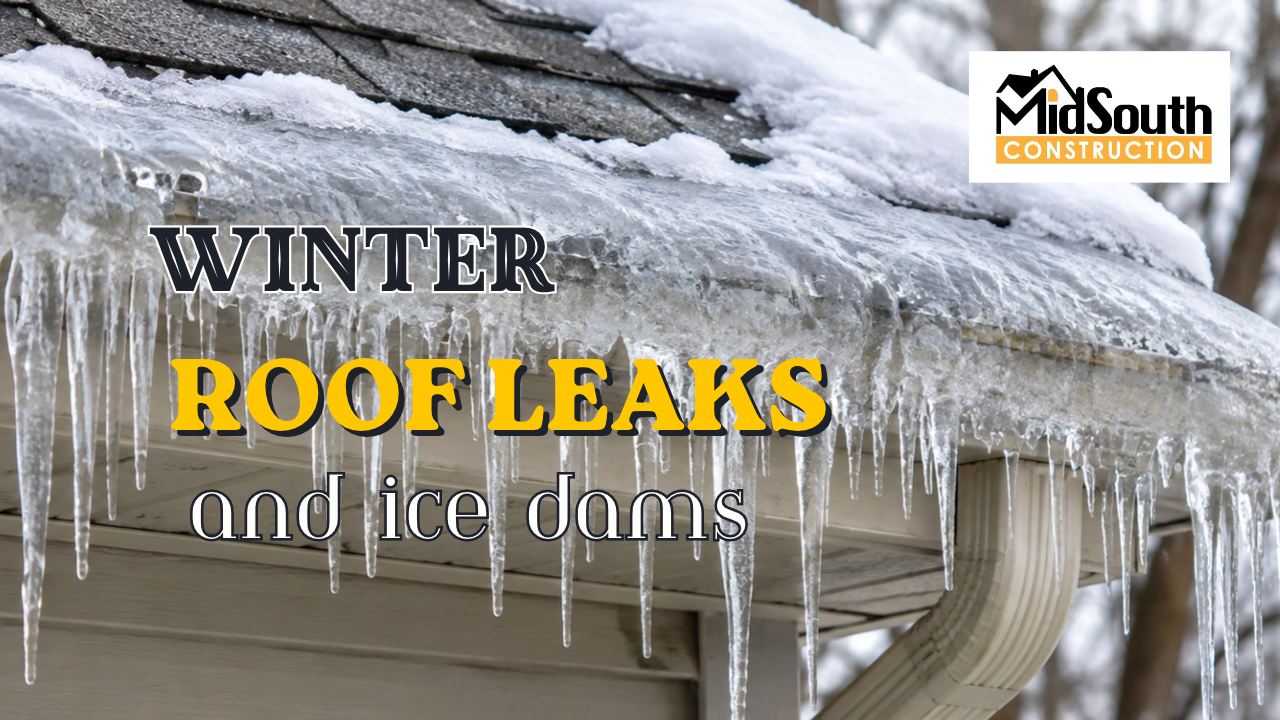
An ice dam is a buildup of ice along the lower edge of a roof that prevents melting snow from draining properly.


Here’s how it happens.

Snow collects on the roof. Heat escaping from the living space or warmer outdoor temperatures causes some of that snow to melt. As the water runs toward the colder roof edge, it refreezes.


Over time, that ice can build up enough to create a barrier. Water from melting snow then collects behind the ice instead of draining off the roof.

Unfortunately, shingles are designed to shed water flowing down the roof, not to hold back standing water. When water accumulates behind an ice dam, it can work beneath the shingles and enter the roof system.


From there, moisture can reach the attic, insulation, ceilings, and walls.

Ice dams are more common in areas with prolonged freezing temperatures and substantial snowfall. However, Middle Tennessee’s occasional snowstorms followed by freezing nights can create the conditions needed for ice dams to develop.


The National Weather Service provides additional information about how ice dams develop and steps homeowners can take to help prevent them.

Ice dam along a residential roof inspected by MidSouth Construction

Signs That Winter Weather May Be Causing Roof Damage

Not every icicle indicates a serious roofing problem, and not every winter roof leak is caused by an ice dam. However, there are warning signs homeowners shouldn’t ignore.


Ice Buildup Along Roof Edges

Thick ridges of ice collecting near the gutters or eaves can indicate that melting snow is refreezing rather than draining.


Water Stains on Ceilings or Walls

A brown or yellow stain on the ceiling may be the first visible sign that water has entered the attic. Sometimes these stains don’t appear until the snow starts melting.


Damp or Wet Attic Insulation

Water can enter the roof system and soak insulation long before anyone notices a problem inside the living space.

Wet insulation can lose some of its insulating effectiveness and may need to be dried or replaced, depending on its condition.


Peeling Paint or Bubbling Drywall

Moisture trapped behind painted surfaces can cause bubbling, discoloration, and peeling. Drywall may also begin to soften or sag.

Dripping Water During a Thaw

If water begins dripping from a ceiling as temperatures rise, don’t assume the problem has resolved just because the snow or ice is melting. Water may still be entering the roof system.

Hail-damaged residential roof showing conditions that may lead to water intrusion

Why Fixing the Roof May Not Be Enough

When a homeowner discovers a winter roof leak, the first concern is usually stopping the water from coming inside.

That’s certainly important. But there’s another part of the problem that can easily be overlooked.


The water that has already entered the home must also be addressed.

Imagine discovering a ceiling stain after several days of snow and freezing temperatures. A roofer identifies the source of the leak and makes the necessary repairs.


The roof problem may be resolved, but what about the wet insulation above the ceiling? Or the moisture that entered the drywall?

Simply painting over a stain or replacing damaged shingles won’t necessarily resolve moisture that remains trapped inside the home.


Depending on the extent of the damage, additional work may be needed, including:

  • Water extraction or removal

  • Moisture inspections and monitoring

  • Structural drying and dehumidification

  • Removal of materials that cannot be properly dried

  • Drywall replacement and painting

  • Interior restoration

Addressing water damage promptly can help reduce the risk of additional deterioration and microbial growth.

This is where having a contractor who understands both roofing and water damage restoration can make a real difference.


One Call. One Company. One Team.

At MidSouth Construction, we do more than install and repair roofs.

We’re a Tennessee-licensed general contractor providing residential and commercial roofing services, along with water mitigation and interior restoration.

When winter weather causes a roof leak and damages the inside of a home, our team can help address both problems.

Step 1: Find and Address the Roof Leak

Our roofing team evaluates the roof to identify the likely source of water intrusion.

That could involve damaged shingles, flashing problems, ice-related water backup, or another condition that allows moisture into the home.

Once the cause is identified, we can recommend appropriate repairs or temporary protection when necessary.

Step 2: Evaluate the Interior Water Damage

Our water mitigation team can assess affected areas and determine whether moisture has reached insulation, drywall, flooring, or other building materials.

Water damage isn’t always visible from the surface, which is why identifying affected materials is important.

Step 3: Remove Water and Dry Affected Areas

When emergency water mitigation is necessary, our team can provide water removal, drying equipment, dehumidification, and moisture monitoring to help return affected materials to appropriate drying conditions.

Step 4: Complete the Interior Repairs

Once the water intrusion has been resolved and affected areas are ready for restoration, MidSouth can complete the necessary interior repairs.

That may include replacing drywall, repairing ceilings, painting, or restoring other damaged areas.

Instead of coordinating a roofing contractor, a water mitigation company, and a separate remodeling contractor, homeowners can work with one company throughout the process.

That’s what we mean when we say:

One Call. One Company. One Team.


s.

water mitigation may be needed for severe ice dams

How to Help Prevent Ice Dams and Winter Roof Leaks

You can’t control Tennessee’s winter weather, but there are steps you can take to help protect your home.

Keep Gutters Clear

Leaves, twigs, and debris can prevent water from draining properly. Clean gutters and downspouts before winter arrives so melting snow and rainwater have a clear path away from your home.

Clogged gutters can worsen drainage problems during freezing weather, although they aren’t the primary cause of ice dams.

Pay Attention to Attic Insulation

Heat escaping from the living space into an attic can warm the roof deck and contribute to uneven snowmelt.

Proper attic insulation and air sealing help limit that heat transfer.

The U.S. Department of Energy recommends improving air sealing, insulation, and appropriate attic ventilation to reduce conditions that contribute to ice dam formation.

Check Attic Ventilation

A properly designed attic ventilation system helps manage heat and moisture beneath the roof deck.

However, ventilation must work together with insulation and air sealing. Simply adding more roof vents isn’t necessarily the solution.

Schedule a Roof Inspection

An inspection can help identify missing or damaged shingles, deteriorated flashing, aging sealants, and other areas that may be vulnerable to water intrusion.

Finding a small problem before winter weather arrives is usually easier than dealing with an active leak during a storm.


If you’re concerned about the condition of your roof heading into winter, MidSouth’s roofing team can help identify potential problems before they turn into costly repair

Don’t Attempt Dangerous Ice Removal

Climbing onto an icy roof or striking ice with a hammer can result in serious injuries and additional roof damage.

If significant ice accumulation is creating a concern, contact a qualified roofing professional rather than attempting to remove it yourself.

Pre-winter roof inspection to identify potential roof damage and drainage concerns

What Should You Do if Your Roof Starts Leaking This Winter?

If you discover water coming through your ceiling during a winter storm, don’t ignore it. Even a small leak can cause significant damage if water continues getting into your home.

Move furniture and valuables away from the affected area and use buckets or containers to catch dripping water if it’s safe to do so.

Take photographs of the damage, especially if you plan to contact your insurance company.

If water is collecting around electrical fixtures or outlets, stay clear of the affected area until it’s safe.

Next, contact a qualified roofing contractor to identify the source of the leak. If water has entered your insulation, drywall, or flooring, those areas may also need professional drying.

At MidSouth Construction, our roofing and water mitigation teams can work together to address the source of the problem and help restore affected areas of your home.

Frequently Asked Questions About Ice Dams and Winter Roof Leaks

Can ice dams form on roofs in Nashville, Tennessee?

Yes. Although ice dams are more common in colder northern climates, they can occur in Nashville and surrounding Middle Tennessee communities when snowfall, roof temperatures, and freezing conditions combine.

Do icicles mean my roof is leaking?

Not necessarily. Icicles alone don’t prove that water is entering your home. However, extensive ice buildup along the roof edge can indicate conditions that may contribute to ice dams and potential water intrusion.

Will homeowners insurance cover damage from an ice dam?

Coverage depends on your specific policy and the circumstances of the loss. Some policies may cover sudden water damage associated with ice dams, while exclusions, deductibles, and maintenance-related limitations may apply. Contact your insurance carrier to confirm your coverage.

Can a roof leak cause mold inside my home?

Yes. Moisture that remains in drywall, insulation, or other building materials can create conditions that support mold growth. Promptly addressing the source of water and properly drying affected materials can reduce that risk.

Do I need a new roof if I have an ice dam?

Not necessarily. An ice dam doesn’t automatically mean your roof needs replacement. A professional roofing inspection can help determine whether the ice buildup caused any damage to your shingles, flashing, or underlying roofing materials. In many cases, repairs may be sufficient to address the problem without replacing the entire roof.

Winter Roof Leak? MidSouth Construction Can Help.

Whether you’re dealing with an active roof leak, ice damage, or water stains appearing on your ceiling, MidSouth Construction can help. Our Nashville-based team provides roofing repairs, emergency water mitigation, and interior restoration services throughout Middle Tennessee. One Call. One Company. One Team. Contact us today to schedule an inspection or discuss your water damage concerns.

Table of Contents

Relevant Articles

7 Signs roof repair is all you need

Roof Repair vs. Replacement Nashville TN

Share at: ChatGPT Perplexity WhatsApp LinkedIn X Grok Google AI A roofing contractor tells you that you need a new roof. You’re looking at spending thousands of dollars, and naturally, your first question is, “Can’t it just be repaired?”     It’s a fair question. And the answer might surprise you.     When it comes to roof repair vs.

Beautiful Franklin TN Home with a roof replacement completed by MiddSouth Construction

Roof Replacement Franklin TN / Customer Experience

Share at: ChatGPT Perplexity WhatsApp LinkedIn X Grok Google AI What Does a Five-Star Roof Replacement Experience Look Like in Franklin, TN? When homeowners search for a roofing contractor in Franklin, TN, they are usually looking for more than someone who can simply install shingles. They want a roofing company they can trust with their home, their property, and a
Tamko Pro Diamond contractor logo.

MidSouth Construction Earns Prestigious TAMKO® Pro Diamond Certified Contractor Status

Share at: ChatGPT Perplexity WhatsApp LinkedIn X Grok Google AI MidSouth Construction is now a TAMKO Pro Diamond Contractor This designation is reserved for the top 5% of TAMKO Pro Certified Contractors Homeowners gain access to enhanced warranty options on qualifying roofing systems. Expect trusted craftsmanship backed by ongoing manufacturer training At MidSouth Construction, we’re always working to do more